The Patient Communication Platform Built for Healthcare Teams

One platform. Every channel. No friction for patients. No new system for staff to learn around.

Most patients don't download new apps. Most don't log into portals. They answer texts and pick up phone calls — on the device already in their pocket, through apps they've used for years, with no new account required.

  • NL Health Services — 80% no-show reduction
  • 50% fewer phone calls
  • No app required
  • HIPAA + PIPEDA/PHIPA compliant

What Is a Patient Communication Platform?

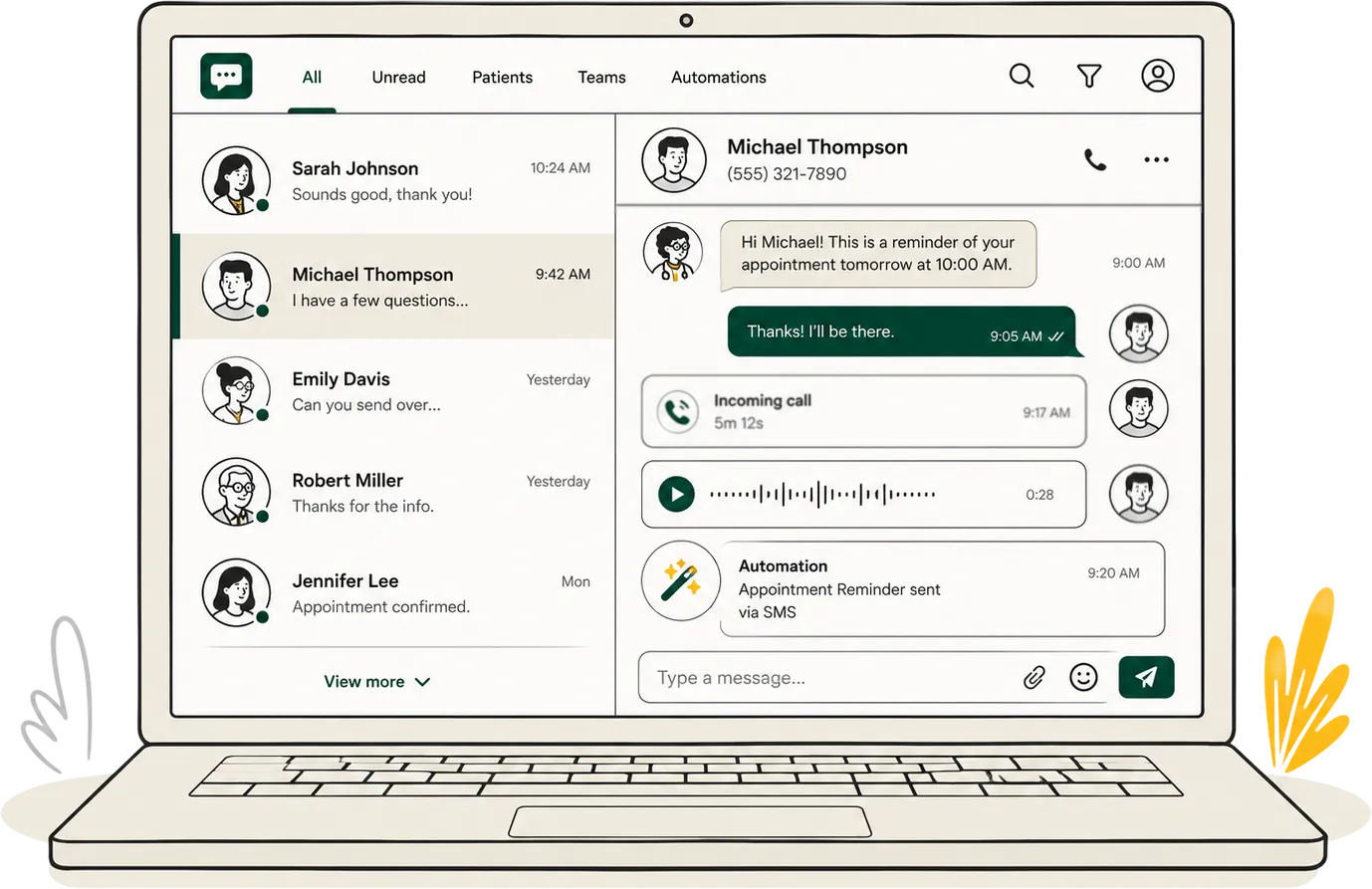
Carrick is a patient communication platform that connects clinics, pharmacies, and health systems to patients through the channels they already use: two-way text messaging, phone calls, AI-assisted voice, and automated outreach — all coordinated in a single inbox your staff works from every day.

Carrick unified inbox showing patient messages, phone calls, voicemail, and automated appointment reminders

A patient communication platform is a system that enables healthcare organizations to send, receive, and manage two-way communication with patients across phone, text, and digital channels — coordinating appointment reminders, care follow-ups, intake forms, broadcast outreach, and AI-assisted conversations from a single interface.

Effective platforms require no patient-side app or portal login. They integrate with existing EMR, pharmacy management, or scheduling systems, and maintain a full audit-compliant message record for every conversation. In healthcare settings, they must meet HIPAA requirements in the United States or PIPEDA/PHIPA requirements in Canada, including encrypted message transmission and patient consent management.

The distinction between a patient communication platform and a generic messaging tool is compliance by design: a BAA, encryption at rest and in transit, audit logs, and role-based access controls — not a checkbox bolted on after the fact.

Why Patient Communication Breaks Down

The front desk phone is where patient communication actually happens. It is also the single biggest source of operational stress for a busy healthcare organization. Calls go unanswered during peak hours. Voicemails pile up across shifts and go unheard until the next morning. Patients who call three times and reach no one stop trying — and stop showing up.

Missed calls and voicemails connected into one patient conversation thread

Patient portals were designed to fix this. They haven't. Portal adoption for routine interactions sits below 30% across most patient populations. The communication burden stays on the phone and on staff who are already stretched.

What makes this worse: providers who feel overwhelmed by call volume instinctively try to be harder to reach. The calculation is understandable — every accessible channel feels like one more fire to manage. In practice, the opposite is true. When patients can reach you easily and reliably, the ones who have been calling repeatedly and getting nothing stop calling repeatedly. Call volume goes down. Staff time is freed. The workload shrinks.

A patient communication platform works because it closes the gaps. Not by adding channels — by making the channels patients already use work correctly for healthcare.

How Carrick Works

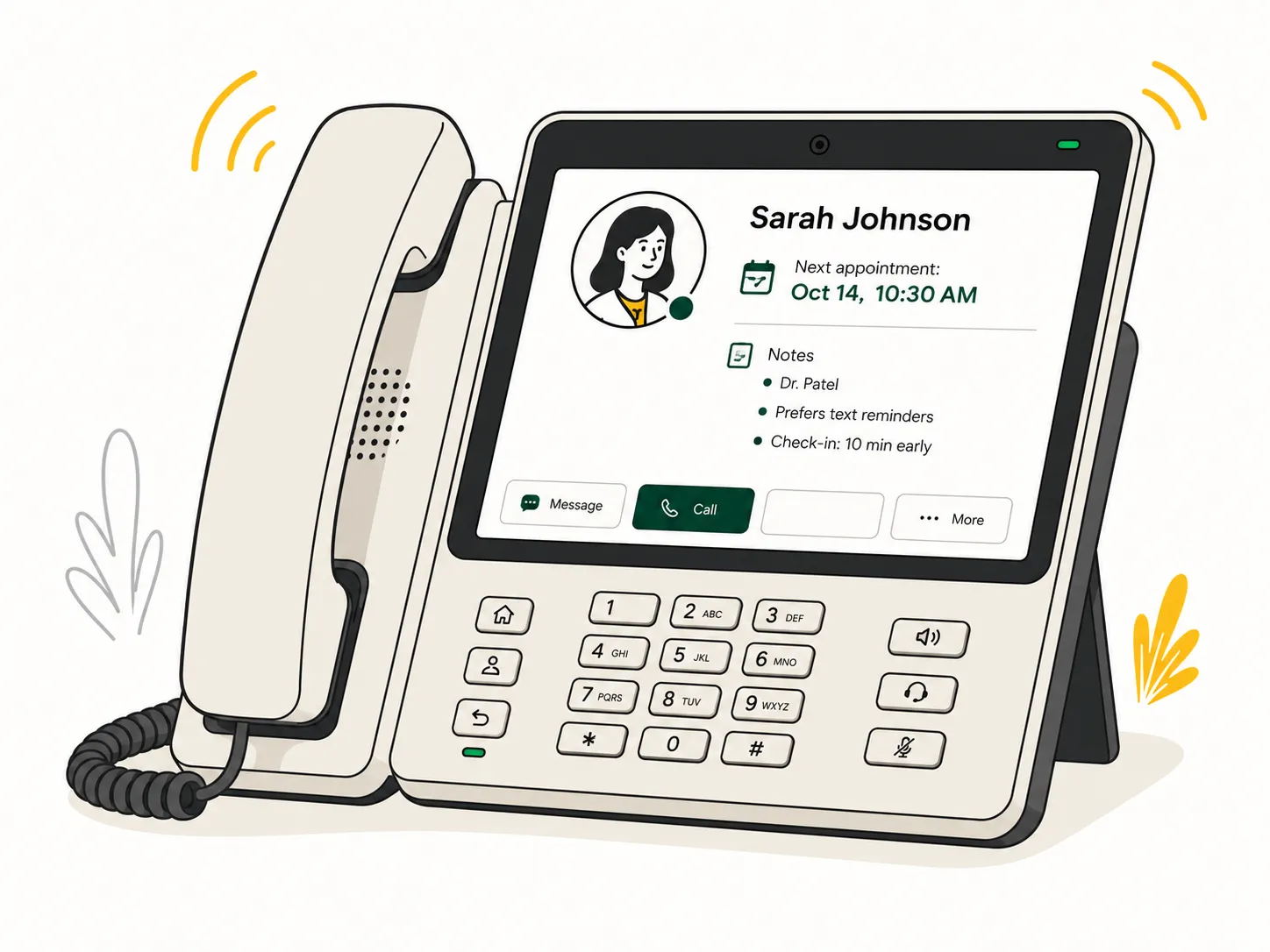
Carrick coordinates patient communication across three channels, threading every interaction — outbound message, patient reply, missed call, voicemail, AI conversation — into a single patient view that any staff member can act on.

Two-way text messaging.

Patients receive messages through native SMS on their existing phone. No download, no login, no behavior change. That includes appointment reminders, intake forms, care instructions, broadcast outreach, and refill requests, all of which arrive and are replied to in the same thread. Staff see the complete message history, including the patient's last response, alongside every other active conversation.

Phone calls and voicemail.

Missed inbound calls convert to text conversations automatically, carrying the context of the call into the thread. Voicemails become inline messages — visible, timestamped, actionable by any staff member — rather than audio files waiting in a shared mailbox that one person may or may not get to by end of day. Call information sits alongside text-based care information, organized by patient, in time order.

AI agents with human handoff.

Guardrailed AI handles high-volume, predictable inbound interactions: appointment confirmations, refill requests, clinic hours, directions. Routine traffic is resolved without staff involvement. When a conversation requires judgment — a clinical question, an unusual request, an upset patient — the AI surfaces it to the right staff member immediately. Human attention is reserved for the conversations that need it.

Every channel feeds into the same unified inbox. Staff do not toggle between a phone system, a texting app, a voicemail platform, and a scheduling tool. They work from one view.

Built for Healthcare. Compliant by Design.

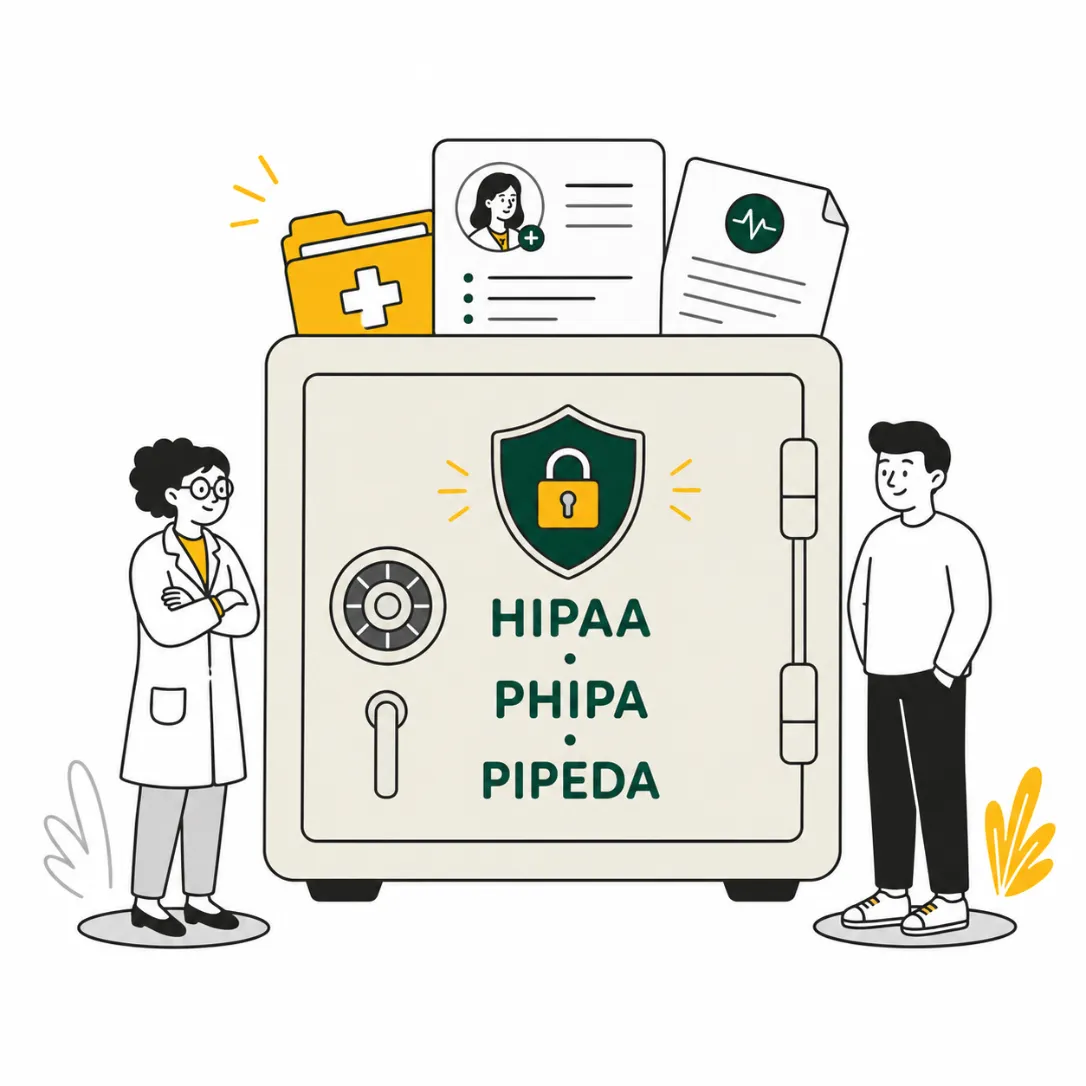
Every message Carrick sends is covered by a signed Business Associate Agreement, included with every plan. The platform is HIPAA-compliant in the United States and meets PIPEDA/PHIPA requirements in Canada — covering clinics, pharmacies, hospitals, health systems, and health authorities across North America.

Compliance is not configured separately. It is built into the infrastructure: encryption at rest and in transit, full message audit logs with timestamps and access records, patient consent management with automatic opt-out handling, and role-based access controls that let clinic managers limit what each staff member can view and send.

Healthcare organizations do not need to build a compliance layer around Carrick. The BAA is signed. The safeguards are in place. Onboarding is a configuration process, not an IT project.

Healthcare records secured for HIPAA, PHIPA, and PIPEDA compliance

What Healthcare Organizations Report

NL Health Services deployed Carrick across 30+ primary care clinics serving 70,000+ patients province-wide. After the first year of operation: no-show rates dropped by 80%. Inbound phone call volume dropped by 50%. Patients who previously called three times and reached no one began receiving consistent, timely outreach — and responding.

The drop in call volume is the result that surprises most new customers. Opening a reliable two-way text channel does not add to the inbound load. It replaces the repeat calls from patients who had no other way to confirm, cancel, or reschedule. When those patients have an easy path, they take it. When the alternative is a busy phone line, they call again.

Acacia Apothecary & Wellness reduced inbound phone calls by 20%. Routine refill requests and appointment follow-ups now move through text entirely, with patient replies stored as a permanent record that every staff member can see — regardless of who handled the original conversation.

HealthOne's Director of Strategy and Partnerships, Jaime Cahill, notes that Carrick "gives unprecedented visibility into patient questions and needs" by wrapping around existing systems rather than replacing them.
Frequently Asked Questions

What is a patient communication platform, and how is it different from a patient portal?

A patient communication platform sends and receives messages through the channels patients already use — primarily text and phone — without requiring them to log in to a separate system. A patient portal is a web-based destination patients must visit, create an account for, and remember to check. Patient communication platforms consistently achieve higher engagement rates because they deliver to the patient rather than waiting for the patient to arrive.

Do patients need to download an app or create an account to use Carrick?

No. Patients receive messages through native SMS on their existing phone and reply the same way. No download, no login, no account creation is required. The experience for the patient is identical to any standard text conversation.

Which EMR and pharmacy management systems does Carrick integrate with?

Carrick integrates with major EMR and pharmacy management systems used across North America. Specific integration compatibility is confirmed during onboarding. Contact the team at carrick.io with your current system to verify before booking a demo.

Is Carrick compliant for healthcare organizations in both the US and Canada?

Yes. Carrick meets HIPAA requirements for US-based providers and PIPEDA/PHIPA requirements for Canadian providers. A signed Business Associate Agreement is included with every plan. No additional compliance configuration is required.

What does Carrick do with missed calls?

When a patient calls and the line is busy or unanswered, Carrick captures the missed call and opens a two-way text conversation automatically. The patient receives a text they can reply to immediately. Staff see the missed call flagged in the unified inbox alongside the patient's message history, and can respond by text or arrange a callback — without the interaction falling through the cracks.

See How It Works in 30 Minutes

Book a demo and we'll walk through your current communication workflow, show you where Carrick replaces the friction, and configure a setup matched to your organization — no IT project required.